
About

Hello,
My name is João Pestana. I hold a degree in Clinical Psychology and I am a Specialist in Clinical Health Psychology recognized by the Ordem dos Psicólogos Portugueses. I am also a member of the Association for Comprehensive Energy Psychology and the European Society for Trauma and Dissociation.
The name Método Pestana reflects the evolution of my professional path — how, over more than twenty years of clinical work, I have woven together psychological practice with the teaching and training activities I pursue across other areas of personal and professional interest. At its core is a collaborative ethos: working alongside each person who seeks my support, whether in a clinical setting or a learning environment.
Early on in my academic journey, I became deeply interested in the relationship between body and mind — a field now explored through psychoneuroimmunology and the biopsychosocial model of health. This interest shaped my final‑year dissertation, “The Role of Spiritual Well‑Being in the Quality of Life of Oncology Patients Undergoing Chemotherapy”, later published as a scientific article in Revista Cons‑Ciências at University Fernando Pessoa.
This work strengthened my understanding of how chronic emotional stress plays a significant role in the onset and recurrence of many physical and psychological conditions.

After completing my degree in Clinical Psychology in 2006, I spent more than a decade at the Algarve Oncology Association, working closely with cancer patients, their families and healthcare professionals. This intense experience strengthened my conviction about::
-
the profound impact of emotions on the processes of disease development and recurrence, as well as on recovery and the maintenance of health;
-
the bidirectional relationship between chronic emotional pain (trauma) and the onset or recurrence of physical and psychological illness;
-
the importance of complementing conventional approaches with interventions that can address the emotional and somatic dimensions of suffering.
Working so closely with the raw reality of human suffering marked a turning point in my career. It led me to explore complementary fields alongside conventional clinical practice, particularly EFT (Emotional Freedom Techniques) and Energy Medicine. I fully recognise that the scientific evidence for these complementary approaches is still limited and evolving.
In addition to my clinical practice, I am a trainer in Eden Energy Medicine (Eden Method) and translated into Portuguese the book "Energy Medicine: A Guide to Balancing Your Body’s Energies for Optimal Health and Joy", by Donna Eden and David Feinstein (Nascente Publishing).
I am also the founder and director of the Academia Método Pestana where I design and coordinate innovative training programs for healthcare professionals and the general public, both in person and online.

If you feel you’ve reached a moment in your life where you need to regain balance, move through health challenges, or bring more energy and meaning into your daily experience, Método Pestana can offer a safe and transformative source of support.
It would be a privilege to accompany you on this journey — whether in a clinical consultation or within a training context.
João Pestana
The Problem
The Problem
Health Needs More Than Talking and Medication

Despite decades of investment in policy, research and technology, physical and psychological health across Western societies continues to face growing challenges. Chronic illnesses are on the rise, emotional difficulties remain widespread, and there is increasing recognition — even within the scientific community itself — that our intervention models need to evolve.
Many factors contribute to this reality, some more positive (such as increased life expectancy), others clearly detrimental (air pollution, sedentary lifestyles, diet and chronic stress). Yet none of these factors sustains the problem as persistently as the model that still shapes most health policies: the biomedical model.
The biomedical model continues to dominate contemporary medicine and psychology. It views the human being as a collection of separate parts, overlooking the complex interplay between body, mind and emotion. Although widely acknowledged as scientifically outdated, it is still taught in universities and continues to influence health policy — with significant consequences for people’s quality of life.
It is undeniable that the biomedical model has brought major advances, enabling us to treat infections and extend life expectancy. But these gains have come with substantial costs for the physical and psychological well‑being of patients.
The limitations of this paradigm become most visible when we look at mental health.
Since 1977, following George Engel’s pioneering work, academic medicine and psychology have formally recognised the biopsychosocial model — which understands health and illness as the result of interactions between biological, psychological and social factors — as a necessary evolution beyond the purely biomedical view that treats the body as a set of isolated systems. This biopsychosocial model is now taught in medical and psychology schools and is, in principle, endorsed by the World Health Organization.
In my clinical experience, the real challenge is not the absence of a better scientific model. It is the gap between what science already acknowledges — the interdependence of body, mind and social context — and the way healthcare continues, in practice, to be organised in a fragmented manner.
From Theory to Practice: How I Found My Own Direction
If science already recognises the interconnection between body, mind and emotions, the question that has always guided me is this: how do we apply that understanding in practice — in a way that is concrete, accessible and consistent with the evidence available?
Throughout my clinical work at the Algarve Oncology Association, and through ongoing professional development, this question led me to explore two distinct dimensions of my work, which I continue to keep clearly separate today:
-
My clinical practice in Psychology, where I use recognised, scientifically validated approaches within the biopsychosocial model described above.
-
My complementary training work, where I explore emerging areas — such as EFT and Energy Medicine — with healthcare professionals and the general public. These approaches are always presented as exactly that: complementary, educational, and supported by scientific evidence that is still developing, never as a substitute for validated clinical intervention.
As a psychologist, I believe it is part of our professional responsibility to contribute to the ongoing development of the discipline — which means remaining open to studying emerging approaches, even when they arise from less traditional fields. That openness, however, must always be accompanied by rigour and transparency about what is, and what is not, scientifically established.
Clinical Practice and Complementary Training
Two Professional Fields, One Integrated Journey
My professional path is grounded in two fields of knowledge which, in my experience, complement one another: Clinical Health Psychology, supported by established scientific evidence, and Energy Medicine, an emerging field that I integrated into my teachings.
Energy Medicine proposes the existence of subtle energetic systems within the human body, drawing on millennia‑old Eastern traditions. It is important to state clearly that this is a theoretical proposition that Western science has not yet validated — and it is precisely for this reason that I present it as a field for learning and personal exploration, not as a foundation for my clinical practice.
The convergence that interests me is not the fusion of these two fields into a single “truth”, but the possibility of offering each one with full transparency about what it can provide: clinical practice for those seeking scientifically validated psychological intervention, and complementary training for those who wish to explore, in an informed way, other approaches to well‑being.
In the treatment of psychological suffering, psychotherapy — and, when appropriate, medication prescribed by a medical doctor — remain the fundamental pillars of mental‑health care. However, limiting therapeutic intervention to these two avenues represents, for me, an incomplete and reductive view of human nature and of how our body and mind truly function and interact with the environment.
Through the Academia Método Pestana, I have developed training in Energy Medicine and EFT — a psychosensory approach that works more directly with the body and the nervous system, and whose scientific research, although still limited in volume, has been steadily growing in recent years.
It is important to be clear: I present EFT and Energy Medicine as fields of training and personal exploration, never as substitutes for psychotherapy or medical care. Those who come to me for clinical practice receive intervention grounded in established scientific evidence; those who come to the Pestana Method Academy find transparent training in a complementary and evolving field.

Vision
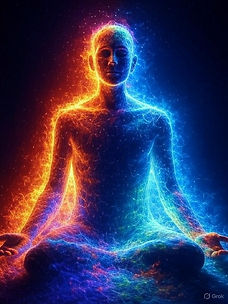
Over time, I began to realize that we live in a society that teaches us to trust what comes from the outside more than the wisdom that lives within us. I too spent many years searching for answers elsewhere — until I understood that the body and mind have a natural capacity for self‑regulation, regeneration, and returning to balance. And that this inner wisdom deserves to be heard.
I started to see the human being not as a machine, but as a living, energetic, and deeply interconnected system. And the more I integrated this perspective into my personal and professional life, the more it made sense — both to me and to those around me.
.jpg)

Today, I see more and more people feeling that same call to look beyond the physical world.
People who are no longer satisfied with superficial solutions. Who want to care for themselves in a more natural, more conscious way — more aligned with who they truly are.
People who, instead of waiting for a better world, choose to build it through small daily gestures — with presence, intention, and positive energy.
I believe in a world where each person steps into their personal power and cares for their health — physical, emotional, mental, and energetic.
A world where care begins within us and extends to our relationships, our communities, and the planet. A world that is more vibrant, healthier, and more human.
This personal perspective guides my interest in complementary fields such as Energy Medicine — but it does not replace, nor does it seek to replace, the scientific rigour that underpins my clinical practice.
